Automate High Content Screening
Turn Consistent Plate Handling Into More Reliable Screening Data
High content screening can reveal cellular activity at scale, but the reliability of its data depends on repeatable plate handling, precise workflow timing, consistent compound preparation and coordinated imaging. Manual transfers between instruments introduce variability and make it harder to keep samples, process information and results connected. LINQ connects liquid handling, incubation, plate handling and imaging equipment within one automated workflow. It brings repeatable sample handling and screening data together in a coordinated process, from compound addition through image acquisition and results capture.
Connect Your High Content Screening Workflow
Connected Screening Data
Integrate multiple data-generating instruments and organize their outputs for transfer to the lab’s LIMS or ELN, helping keep screening results connected to the relevant samples and workflow steps.
Consistent, Time-Controlled Labware Handling
Use LINQ scheduling to manage time constraints between actions and coordinate how plates containing samples or reagents move through the workflow. This reduces reliance on separate manual timers and plate transfers.
Repeatable Compound Dilution and Addition
Automate compound dilution and addition to reduce manual pipetting and variation in the timing of compound delivery between samples.
Solutions
High Content Screening and Imaging
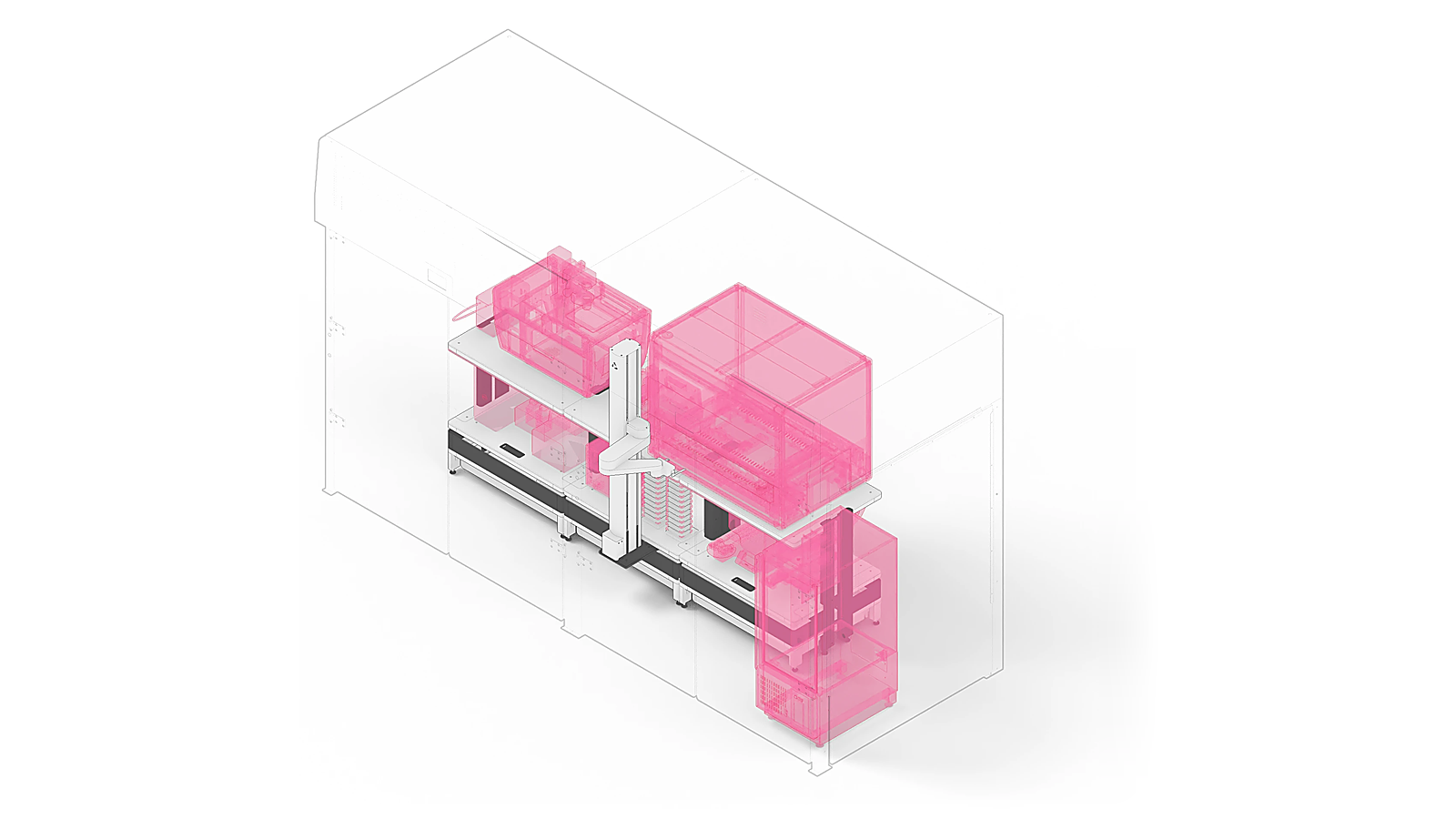
This automated workcell connects incubation, liquid handling, plate sealing and peeling, centrifugation and high-content imaging within an enclosed system. By automating plate movement between these steps, the system reduces repeated operator handling and supports consistent processing across the screening workflow.

Connect Screening Workflows and Data
LINQ coordinates liquid handling, timed plate movements, imaging and data tasks across the screening workflow. Build and adapt workflows using accessible workflow-creation tools or the Python SDK, then monitor runs and direct data to the systems where it is needed.