Automate Complex Cell-Based Assays
Keep Complex Assays Moving With Less Manual Oversight
Complex compound-testing workflows can require repeated plate transfers and close operator oversight between liquid handling, incubation and detection. These manual interventions make it harder to maintain consistent timings and increase assay throughput efficiently. LINQ provides a flexible, modular solution that connects these steps within an automated workcell, helping reduce manual handling and support reliable data collection.
Connect More of Your Cell-Based Assay Workflow
Sustainable Liquid Handling
Utilize liquid handling technology to perform precise compound transfers without disposable pipette tips, reducing consumable use, costs and associated plastic waste.
Integrated Assay Processing
Connect liquid handling, reagent dispensing, shaking and multimode plate detection within a single workcell to support efficient processing and data collection in a compact footprint.
High-Capacity Incubation
Load multiple assay-ready plates into a large-capacity incubator and maintain them until required by the workflow, supporting longer periods of walkaway operation.
Connected Monitoring and Data Capture
Monitor workflow progress and receive alerts through LINQ. Automated data capture helps maintain a record of assay activity and results throughout the process, supporting reproducibility, traceability and the recordkeeping requirements of regulated workflows.
Solutions
Cell-Based Assay System
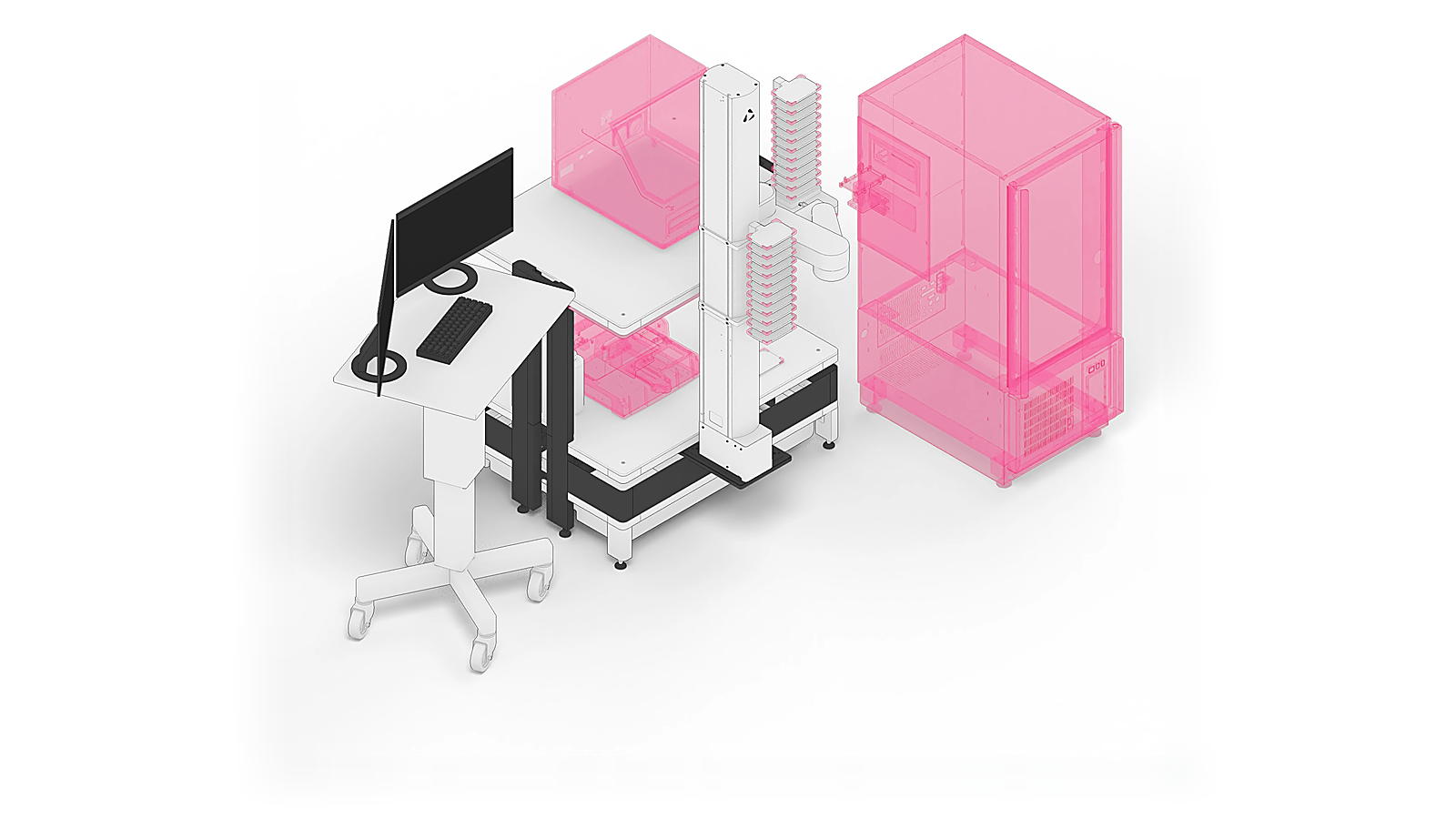
Designed for complex compound testing, this automated workcell connects incubation, liquid handling, reagent dispensing, shaking and multimode plate detection. The system can support workflows such as cytotoxicity, inflammation and cell-viability assays. The analytical instrument can also be changed to provide a different output, such as imaging, while retaining the wider workflow configuration.

Keep Complex Assay Workflows Moving
LINQ schedules and coordinates compound handling, incubation, plate movements and detection across connected equipment. Monitor runs from a central interface and incorporate data tasks into the workflow, helping keep assay activity and results connected.